
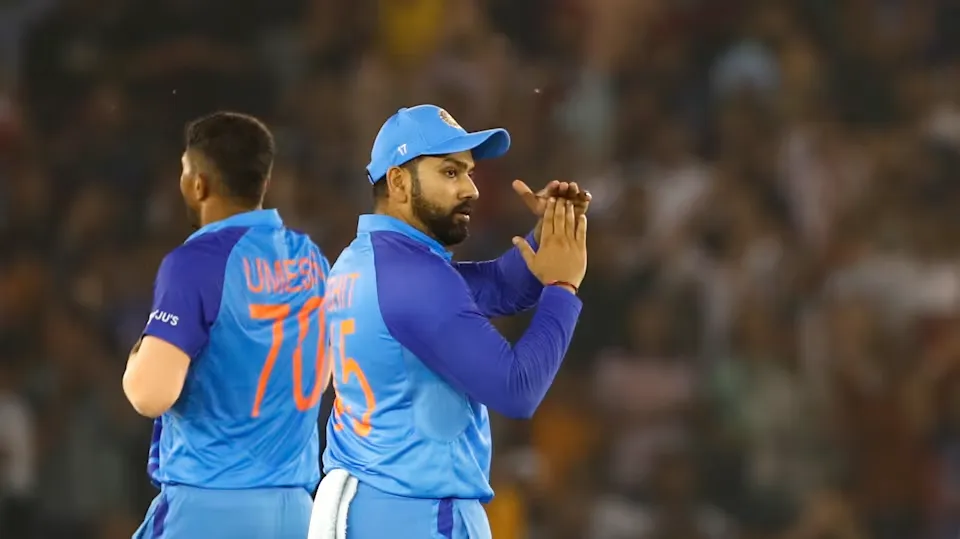
ultra edge review systemtechnology has become an inseparable part of the modern cricketing experience, acting as the final arbiter in moments that would have once sparked decades of debate. Imagine a stadium packed with eighty thousand people, the bowler screaming in a desperate appeal for a caught-behind, and the umpire standing as still as a statue. In years past, that would be the end of the story, leaving fans to argue over graining replays for weeks. Today, the game pauses, the captain signals a T-shape with their arms, and the world waits for the familiar waveform to appear on the giant screen.
This technology is far more than just a microphone near the stumps; it is a sophisticated marriage of high-frequency audio recording and frame-by-frame video synchronization. When we talk about the integrity of professional sports, we are talking about the ability to get the “right” decision regardless of how loud the crowd is or how much pressure the players apply. The shift from human guesswork to data-driven certainty has transformed cricket from a game of “howlers” to a game of surgical precision. It has fundamentally changed the way batters play and how bowlers strategize their attacks.
The beauty of the system lies in its transparency. Fans at home and in the stands see exactly what the third umpire sees, creating a shared narrative of suspense. We watch the ball pass the bat in slow motion, our eyes glued to the flat line at the bottom of the screen, waiting for that tell-tale “spike.” It is a moment of high drama that has become a staple of the broadcast, proving that technology does not always strip away the emotion of a sport; sometimes, it enhances it by providing a definitive climax to a tense confrontation.
For the players, the presence of the ultra edge review system serves as a psychological safety net. A batter who knows they didn’t hit the ball can stand their ground with confidence, knowing that the technology will likely vindicate them. Conversely, a bowler who is certain they heard a faint “snick” can convince their captain to burn a review, often turning the tide of a match. This interaction has added a new layer of tactical depth to the game, as teams must now manage their limited reviews with the same care they manage their bowling rotations.
The Evolution of the ultra edge review system in Cricket
The journey to our current technological peak began with the original Snickometer, which was a brilliant but relatively basic invention. It relied on a single microphone and a separate video feed that had to be manually synced by a technician. This process was slow and occasionally prone to human error, as aligning the audio wave with the exact frame of the ball passing the bat was more of an art than a science. As the stakes of international cricket grew, the governing bodies realized they needed something more robust and automated.
The modern iteration of the system uses a network of stump microphones and specialized software that automatically aligns the audio and video streams. This automation is what allows the third umpire to scroll through the footage so quickly, checking for deviations in the sound wave that occur at the precise millisecond the ball is adjacent to the willow. The software is designed to filter out ambient noise, such as the roar of the crowd or the wind, focusing specifically on the high-frequency sounds generated by a ball hitting a wooden bat.
One of the most significant improvements in the ultra edge review system is its ability to differentiate between different types of contact. In the heat of the moment, it can be difficult for a human to tell if a sound came from the bat hitting the pad, the ball hitting the ground, or a genuine edge. The sophisticated algorithms within the system can analyze the “shape” of the sound wave. An edge off the bat typically produces a sharp, jagged spike, whereas the ball hitting a pad produces a flatter, more muffled wave. This distinction is vital for ensuring that LBW decisions are not confused by secondary noises.
The integration of this tech into the broader Decision Review System (DRS) has made the officiating process more holistic. Umpires now have a suite of tools at their disposal, from ball-tracking to heat mapping and audio analysis. This multi-layered approach ensures that even the most complex scenarios—such as a ball hitting the bat and pad almost simultaneously—can be deciphered with a high degree of confidence. It is a testament to how far sports broadcasting and officiating have come in a relatively short period.
How the ultra edge review system Handles High-Pressure Scenarios
There is no greater test for a technological system than a World Cup final or a deciding match in an Ashes series. In these moments, the pressure on the third umpire is immense, and any failure of the equipment would be catastrophic. The reliability of the audio-visual sync is the cornerstone of the system’s credibility. Technicians spend hours before every match calibrating the microphones and ensuring that the frame rates of the cameras are perfectly aligned with the audio capture device.
We have seen numerous instances where a championship has hinged on a single “spike” that was barely visible to the naked eye. These moments validate the immense investment that goes into the technology. It isn’t just about the big edges that everyone can hear; it’s about the “whisper” edges that even the wicketkeeper might miss. By picking up these microscopic interactions, the system ensures that the superior skill of the bowler is rewarded, even when the human officials are unable to perceive the contact.
The system also plays a crucial role in player safety and conduct. Because every interaction is recorded and analyzed, there is less room for players to engage in unsporting behavior or “fake” an appeal. The transparency of the review process holds everyone accountable. If a bowler celebrates a wicket that the technology clearly shows was not an out, it reflects poorly on their professional judgment. This has led to a more disciplined approach to appealing, with players becoming more selective about when they challenge the umpire’s decision.
Interestingly, the technology has also influenced the “art” of batting. Modern players are aware that they cannot hide a faint edge anymore. This has led to adjustments in technique, with many batters focusing on playing with a “dead bat” or ensuring a clear gap between the bat and pad to avoid any confusion for the third umpire. The presence of the cameras and microphones has essentially turned the cricket pitch into a high-tech laboratory where every movement is scrutinized and measured.
The Technical Magic Behind Audio-Video Synchronization
To truly appreciate why the ultra edge review system is so reliable, we have to look at the concept of “latency” and “frame rates.” A standard broadcast camera captures about twenty-five to thirty frames per second. However, for elite-level officiating, this is not nearly enough. The cameras used for reviews often operate at much higher speeds, allowing the umpire to see the ball’s movement in micro-increments. The audio, meanwhile, is recorded at thousands of samples per second, providing a nearly continuous stream of sound data.
The challenge is ensuring that frame number 452 of the video corresponds exactly to millisecond 18.4 of the audio. If there is even a tiny misalignment, the system could show a spike when the ball is nowhere near the bat, leading to a massive injustice. The software uses a common time-code that links all devices on the field. This synchronization happens automatically and is constantly checked for drifts or errors. This is why the third umpire can confidently say, “I can see the spike as the ball passes the bat,” knowing that the two pieces of evidence are perfectly correlated.
Another layer of this technical magic is the noise-cancellation feature. A cricket stadium is a noisy place, filled with music, chanting, and the general hum of thousands of people. The stump microphones are designed to be directional, focusing on the area around the crease. The software then applies digital filters that ignore low-frequency background noise while highlighting the high-frequency impact sounds. This is why the audio on the broadcast sounds so clear, even when the stadium is erupting in cheers.
This level of detail has made the system a favorite for broadcasters, who use it not just for reviews but also for replays and analysis. It provides a tactile sense of the game, allowing viewers to “hear” the power of a shot or the sharpness of a delivery. It has added a sensory dimension to the viewing experience that was missing for most of the sport’s history. The rhythmic “tick-tick-tick” of a batter knocking the ball around for singles becomes a soundtrack to the afternoon, punctuated by the dramatic “crack” of a boundary.
Strategic Review Management and Captaincy
The introduction of limited reviews per innings has turned the ultra edge review system into a strategic resource. Captains can no longer afford to review every close call based on emotion. They must act as managers of a high-stakes asset. A review lost in the first five overs could be the reason a team loses a match in the final five. This has led to a much closer collaboration between the captain, the bowler, and the wicketkeeper.
The wicketkeeper is often the most important person in this decision-making process. Because they are standing directly behind the stumps, they have the best “audio” experience on the field. They are the first to tell the captain if they heard a “woody” sound or if the noise came from the ball clipping the trousers. A captain who trusts their keeper is far more likely to use the technology effectively. This has increased the value of “tactical” keepers who can remain calm under pressure and provide accurate feedback.
We often see “panic reviews,” where a team is desperate for a breakthrough and uses their final challenge on a hopeful appeal. When the screen shows a flat line, the disappointment is twofold: they have lost a wicket opportunity and their last review. This creates a fascinating sub-plot in every match. A team that retains its reviews into the final session of a Test match has a significant psychological advantage over their opponents, as they still have the power to challenge a potential mistake.
The system also influences the batter’s strategy. If a batter knows the opposition has no reviews left, they might feel slightly more emboldened to take risks, knowing that a faint edge might go unpunished if the on-field umpire misses it. It is a game of “information asymmetry” where knowing the status of the technology is just as important as knowing the state of the pitch. This meta-game has become a favorite topic for analysts and commentators, who dissect every review with the same intensity they use for a player’s batting average.
Why the ultra edge review system is Essential for EEAT in Sports
In the context of Experience, Expertise, Authoritativeness, and Trustworthiness (EEAT), the use of high-tech officiating is a non-negotiable. For a sport to be taken seriously at the global level, its results must be beyond reproach. The technology provides an objective standard that transcends the biases of individual umpires or the influence of home-crowd pressure. It establishes a level of authoritativeness that ensures the winner of a match is the team that played better, not the team that got the luckiest with the officiating.
Trustworthiness is built over time through consistent performance. Because the system has proven itself reliable across thousands of matches and various conditions, fans have grown to trust the results it produces. Even when a decision goes against their favorite team, most fans accept it because they can see the evidence for themselves. This transparency is the ultimate tool for building a loyal and engaged global audience. It removes the “conspiracy theories” that can often plague sports when decisions are made behind closed doors or based on subjective opinions.
Expertise is demonstrated by the specialized technicians and umpires who operate the system. These individuals undergo rigorous training to ensure they can interpret the data quickly and accurately. They aren’t just looking at pictures; they are analyzing waveforms and frame rates under immense time pressure. This professionalization of officiating has raised the standard of the entire sport, ensuring that every match is handled with the highest level of care and technical skill.
Finally, Experience is what allows the system to evolve. Every match provides more data, which is used to refine the algorithms and improve the hardware. If a particular type of clothing or a specific type of pitch starts causing “false positives” in the audio data, the developers can adjust the filters to account for it. This continuous loop of feedback and improvement is what keeps the technology at the cutting edge of sports science, ensuring it remains the gold standard for years to come.
The Human Element in a Tech-Driven World
Despite all the talk of sensors and algorithms, the human element remains the most important part of the equation. The technology is a tool, not a replacement for the umpire. The third umpire still has to make the final judgment call, interpreting the data provided by the screen. They have to decide if a spike is perfectly timed with the ball passing the bat or if it occurred a fraction of a second later, perhaps due to the bat hitting the pad.
This human-led, tech-assisted model is what makes the system so successful. It avoids the cold, robotic feel of fully automated officiating while providing the accuracy that modern sports demand. The dialogue between the on-field umpire and the third umpire is a masterclass in professional communication. They use standardized language to ensure there is no confusion, following a strict protocol that has been refined over years of international play.
There is also the emotional human element for the fans. The “wait” for the result—the few seconds while the third umpire checks the different angles—is a shared experience of tension and release. It creates a rhythm to the match that didn’t exist before. These pauses allow the commentators to build the story, the fans to hold their breath, and the players to reset. It is a modern tradition that has quickly become one of the most recognizable features of the sport.
As we look to the future, we can expect the technology to become even faster and more integrated. AI might soon be used to provide an “instant” verdict to the third umpire, further reducing the time taken for reviews. However, the core principle will remain the same: providing a fair and transparent way to settle the game’s closest contests. The journey of the audio-visual review has been one of constant improvement, driven by a simple desire to make the game as fair as possible for everyone involved.
In the end, the technology serves the sport, not the other way around. It protects the integrity of the contest and ensures that the narrative of a match is written by the skill of the players rather than the errors of the officials. Whether you are a traditionalist who loves the slow burn of a Test match or a modern fan who craves the excitement of T20, the presence of the waveforms and the slow-motion replays has made the game better, fairer, and more exciting than ever before.
ऑस्ट्रेलिया राष्ट्रीय क्रिकेट संघ वि भारत राष्ट्रीय क्रिकेट संघ सामन्याचे स्कोअरकार्ड
mumbai cricket team vs goa cricket team match scorecard
kerala cricket team vs mumbai cricket team match scorecard
maharashtra cricket team vs himachal pradesh cricket team match scorecard
tamil nadu cricket team vs tripura cricket team match scorecard
