
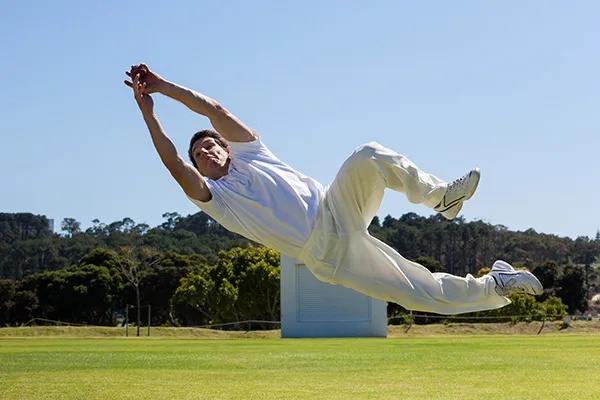
Fielding agility drills are often the deciding factor between a championship-winning catch and a boundary that shifts the momentum of the game in favor of the opposition. Imagine the scene where the sun is beating down, the game is in its final overs, and a sharp edge flies toward the backward point region. In that split second, the player doesn’t have time to think about their footwork or their center of gravity; they simply react based on the thousands of repetitions they have performed during training. This instinctive movement is exactly what high-quality agility training aims to cultivate in every cricketer, from the grassroots level to the international stage.
The modern game has placed a massive premium on what happens between the wickets when the ball is in the air or zipping across the grass. We have moved far beyond the era where fielding was considered a secondary skill used primarily to rest between batting and bowling stints. Today, a single run saved in the circle or a miraculous sliding stop on the boundary can be worth more than a dozen runs scored with the bat. This shift in perspective has led to a revolution in how athletes prepare their bodies, focusing more on explosive lateral movements and rapid deceleration.
To understand the true depth of these training methods, one must appreciate the sheer variety of movements required on a cricket field. A fielder might need to sprint thirty yards in a straight line, then suddenly pivot forty-five degrees to chase a ball that has taken a wicked deflection. Alternatively, they might be crouched in the slips, requiring the kind of static-to-explosive power that only specific training can provide. It is this multi-directional nature of the sport that makes specialized training so essential for anyone looking to make an impact in the field.
Developing these skills requires a combination of physical conditioning and mental sharpness. It isn’t just about how fast your legs can move, but how quickly your brain can process the trajectory of the ball and send the correct signals to your muscles. This mind-body connection is the foundation of elite athleticism. When we dive deep into the world of professional preparation, we find that the most successful players are those who treat their fielding sessions with the same intensity and focus as a crucial match-winning spell of bowling.
The Foundation of Movement and Fielding Agility Drills
The first step in any serious training program is mastering the mechanics of the “ready position.” This is the crouched, athletic stance that allows a fielder to move in any direction with minimal delay. If your weight is too far back on your heels, you will be slow to react to a ball hit in front of you. If you are standing too tall, your first step will be spent lowering your center of gravity rather than moving toward the target. Achieving this balance is a skill in itself, requiring strong core muscles and flexible hips that can hold a deep squat for extended periods.
Once the ready position is mastered, coaches often introduce the “Star Drill” to test a player’s ability to change direction under pressure. In this setup, several cones are placed in a circle with one central marker. The player starts in the middle and must sprint to a specific cone, touch it, and return to the center as quickly as possible. This sounds simple in theory, but when a coach is calling out random numbers or colors, it becomes a test of cognitive processing and explosive footwork. It forces the player to find the most efficient path and the shortest possible turning circle.
Another essential component of the foundation is the lateral shuffle. Most of the action in the inner circle involves moving side-to-side rather than forward and back. A fielder who can shuffle across the turf while keeping their eyes level and their hands ready is a nightmare for any batsman trying to find a gap. This movement requires incredible strength in the glutes and abductors. Training this involves keeping the feet wide apart and avoiding the “crossing of legs,” which is a common mistake that leads to lost balance and missed opportunities.
Fielding agility drills also focus heavily on the “first step” principle. Research has shown that the first three steps of a sprint are where most of the advantage is gained or lost in a short-distance chase. Coaches use resistance bands or weighted vests to help players develop that initial burst of power. By training against resistance, the muscles learn to fire more rapidly, leading to a much higher velocity when the constraints are removed. This is often the difference between getting a fingertip to a ball and grabbing it with both hands.
Mastering High-Intensity Fielding Agility Drills for Competitive Play
As a player progresses, the drills must become more “game-realistic” to ensure that the skills translate to the match environment. This often involves introducing unpredictable elements like the “Crazy Ball” or a tennis ball hit with a racket. The unpredictable bounce forces the fielder to adjust their footwork at the very last microsecond, mimicking the uneven surfaces or late deflections often found on a natural grass pitch. This type of training builds “reactive agility,” which is far more valuable than pre-planned movement.
One of the most effective ways to simulate match pressure is through the “Triangle of Speed” drill. Three players stand in a triangle, and a coach hits the ball toward one of them. The other two must immediately move to back up the throw or cover the potential overthrows. This teaches players that fielding is a collective effort and that their movement doesn’t stop once the ball has passed them. It builds a sense of situational awareness that is often the hallmark of a great fielding unit, where everyone seems to be in the right place at the right time.
Sliding is another modern skill that has been refined through rigorous practice. In the past, players would often stop and bend down to pick up the ball near the boundary, losing precious seconds and allowing the batsmen to take an extra run. Today, the “feet-first slide” allows a player to intercept the ball while maintaining momentum, flicking it back to a teammate or getting back to their feet in one fluid motion. Practicing this on wet grass or a specialized mat helps players overcome the fear of friction and learn the correct angle to hit the ground without causing injury.
The “Short-Range Reaction” drill is specifically designed for those who occupy the slip or gully positions. These players often have less than half a second to react to a ball traveling at nearly a hundred miles per hour. Training involves standing behind a “deflector board” that changes the ball’s path at the last moment. This forces the fielder to keep their hands “soft” and their eyes locked on the ball’s trajectory. It’s a grueling exercise that tests mental stamina as much as physical quickness, but it pays massive dividends during a long day in the field.
Developing Advanced Fielding Agility Drills for Elite Performance
At the highest level of the sport, the focus shifts toward “micro-adjustments” and the efficiency of deceleration. While everyone wants to be fast, the ability to stop safely and quickly is what prevents injuries and allows for a rapid return throw. If a player overruns the ball because they couldn’t slow down in time, all their initial speed is wasted. Coaches use “stop-and-start” patterns where players must sprint to a line and come to a complete, balanced halt within a very narrow window.
The “Circle of Fire” is another advanced drill that tests a player’s endurance and agility simultaneously. A group of fielders stands in a large circle, and multiple balls are kept in play at once. They must move, catch, throw, and rotate positions without any ball hitting the ground. As the speed increases, the margin for error disappears. This drill is fantastic for building “vision” – the ability to see multiple things happening at once and prioritizing the most important action. It’s chaotic, loud, and incredibly effective at building the kind of pressure found in a T20 powerplay.
Another sophisticated technique used by elite teams is “Shadow Fielding.” This involves a player moving through their fielding motions without a ball, focusing entirely on the purity of their footwork and body positioning. It allows the athlete to internalize the correct movements without the distraction of a result. When the ball is eventually introduced, the body naturally falls into the optimized patterns it has learned during the shadow sessions. It is a form of “muscle memory” training that has become a staple for professional cricketers globally.
We must also consider the role of the “long barrier” in modern fielding agility drills. While it is one of the oldest techniques in the book, the way it is taught today is much more dynamic. Instead of just dropping to one knee, players are taught to “track the ball” with their feet first, ensuring that their body is always behind the line of the ball. This requires a quick lateral shuffle followed by a controlled drop. Training this at high speeds ensures that even if the hands miss the ball, the body acts as a secondary wall, preventing the extra run that can be so costly in a tight game.
The Role of Equipment and Surface in Training
The tools used in modern training have come a long way from the simple wooden bat and leather ball. Coaches now use “flickers” or “ramps” to generate high-velocity catches and ground balls with minimal physical strain on the coach’s arms. This allows for higher volume sessions where a player can receive fifty or sixty high-quality chances in a single hour. The consistency of these tools means that the player can focus entirely on their technique rather than worrying about the quality of the “feed.”
Cones, ladders, and hurdles remain essential for building the basic “foot-speed” that underpins all agility. Ladder drills, in particular, are brilliant for improving the “brain-to-feet” connection. By forcing the feet to move in complex patterns within the rungs of the ladder, the player develops a greater sense of where their body is in space. This “proprioception” is what allows a fielder to make a catch near the boundary rope without looking down to see where the edge of the field is.
The surface on which you train also has a significant impact on the results. While many drills can be done on artificial turf or in an indoor gym, there is no substitute for the unpredictability of natural grass. The way a ball “snakes” across the turf or sticks in a damp patch requires a level of physical adaptability that cannot be replicated elsewhere. Elite players often rotate their training across different surfaces to ensure they are ready for the dusty pitches of the subcontinent or the lush, fast outfields of Australia.
Wearable technology has also entered the world of fielding. GPS trackers can now measure a player’s “acceleration profile” and “change-of-direction speed” during a training session. This data allows coaches to identify if a player is getting slower toward the end of a session, indicating a need for better conditioning or a change in technique. It turns the art of fielding into a measurable science, providing objective feedback that helps athletes push their limits in a safe and structured way.
The Mental Aspect of Agility and Reaction
Fielding is often described as 90% boredom and 10% sheer terror. Maintaining focus during long periods of inactivity is perhaps the hardest part of the job. Fielding agility drills that include “distraction elements” are used to help players stay sharp. For example, a coach might have other players running across the fielder’s line of sight or shouting instructions to try and break their concentration. Learning to “tune out the noise” and focus only on the ball is what separates the greats from the rest.
Visual cues are another area of focus. A player doesn’t wait for the ball to be hit before they start moving; they watch the batsman’s feet, the angle of the bat, and even the bowler’s delivery. By picking up these “pre-cues,” a fielder can get a head start of a few precious milliseconds. Training this involves watching videos of batsmen and trying to predict where the ball will go, or having a coach simulate different shots while the fielder tries to move into the correct “anticipation zone.”
Confidence is the invisible engine that drives agility. A player who is afraid of making a mistake will move tentatively, which ironically makes a mistake more likely. By creating a training environment where players are encouraged to “dive and miss” rather than “play it safe,” coaches build a culture of aggression. When a player knows they have the skills to recover from a slip or a bad bounce, they play with a freedom that allows their natural athleticism to shine through.
This mental resilience is also built through “fatigue training.” Performing complex agility patterns at the very end of a long session simulates the final over of a match when the body is tired but the mind must stay sharp. It teaches the athlete how to “switch on” when it matters most, using their breathing and specific mental triggers to regain focus. This “clutch” ability is what fans remember long after the game is over, and it is forged in the repetitive heat of the practice ground.
Injury Prevention and Long-Term Athleticism
One of the most overlooked benefits of regular agility work is its role in preventing common sporting injuries. Many hamstring tears and ankle sprains occur during sudden changes of direction when the muscles aren’t prepared for the load. By gradually increasing the intensity of lateral movements in a controlled environment, the tendons and ligaments become more resilient. This “pre-habilitation” is essential for extending a player’s career and keeping them on the field during a long and grueling season.
Warm-up routines have also evolved to reflect the demands of the modern game. A static stretch is no longer enough. Instead, players engage in a “dynamic warm-up” that includes lunges, leg swings, and short bursts of agility. This “wakes up” the nervous system and ensures that the muscles are warm and ready for explosive action. It’s about preparing the body for the specific “chaos” it is about to experience, rather than just getting the heart rate up.
Rest and recovery are the final pieces of the puzzle. High-intensity agility work is demanding on the central nervous system, and players need adequate time to recover between sessions. Overtraining can lead to a “diminishing return” where the feet become heavy and the reactions slow down. The best programs are those that balance intense work with active recovery, such as swimming or light yoga, to keep the body supple and the mind fresh.
Ultimately, the goal of these fielding agility drills is to create a complete athlete who is ready for any challenge the game can throw at them. Whether it’s a stinging drive at head height or a slow, rolling bunt into the covers, the prepared fielder has the tools to deal with it. It’s a journey of a thousand small steps, each one bringing the player closer to that perfect moment of athletic grace that can change the course of history.
The dedication required to master these movements is immense, but the rewards are unparalleled. There is no feeling quite like seeing a plan come together—when the hours of shuffling, sprinting, and diving result in a match-winning play. It builds a sense of pride and contribution that is unique to the fielding unit. As the game continues to evolve and the margins for error get even smaller, the importance of agility will only grow, making it the most vital skill for the next generation of cricketing stars.