
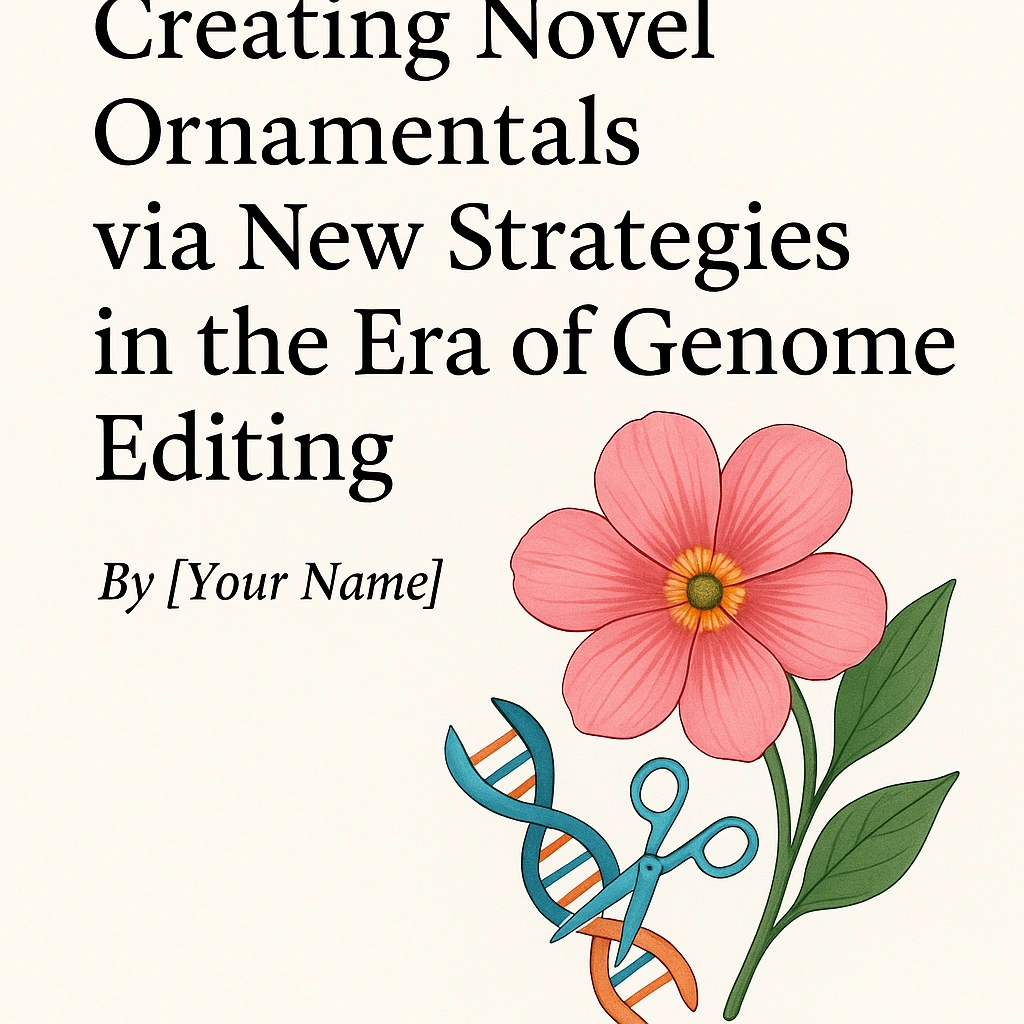
The ornamental plant industry is a multi-billion-dollar global sector that brings beauty, value, and biodiversity to our landscapes and indoor spaces. For decades, plant breeders relied on traditional hybridization, mutagenesis, and selection methods to create visually appealing flowers and foliage. However, the 21st century has ushered in an era of precision and innovation: genome editing. Through tools like CRISPR/Cas9, researchers and horticulturists are now equipped to design novel ornamentals with targeted traits—from unique colors and enhanced fragrance to disease resistance and environmental resilience. This article explores how genome editing is reshaping ornamental plant breeding and why it’s a revolutionary leap forward.
Traditional Breeding vs. Modern Genome Editing
Before delving into new strategies, it’s essential to understand the limitations of traditional breeding:
-
Time-consuming processes: Traditional methods require multiple generations to stabilize desired traits.
-
Limited gene pools: Crosses are restricted to species that can interbreed naturally.
-
Unpredictable outcomes: Traits may segregate unexpectedly, and desirable characteristics can be lost.
In contrast, genome editing allows for:
-
Precision targeting of genes responsible for color, scent, or growth.
-
Faster development of new cultivars.
-
Introduction of traits from distant or even unrelated species (transgenic methods or cisgenic variations).
The CRISPR/Cas Revolution
The CRISPR (Clustered Regularly Interspaced Short Palindromic Repeats) technology, particularly the CRISPR/Cas9 system, has emerged as the most promising genome editing tool. Here’s how it works:
-
Guide RNA (gRNA) locates a specific gene sequence.
-
Cas9 enzyme makes a cut in the DNA at that location.
-
The plant’s natural repair mechanisms modify the DNA—either by knocking out a gene, introducing new sequences, or repairing mutations.
The result? Targeted, efficient, and relatively low-cost modifications that were nearly impossible before.
New Strategies for Novel Ornamentals
The goal of ornamental breeding has always been to create eye-catching, resilient, and marketable plants. Here’s how modern strategies align with that goal:
1. Color Customization
Color is one of the most defining attributes of ornamental plants. Genome editing allows:
-
Disruption of pigment pathways (e.g., anthocyanin, carotenoid, betalain).
-
Enhancement of rare hues such as blue roses or black tulips.
-
Stability of color under different environmental conditions.
For example, scientists edited the flavonoid pathway in Petunia species to produce unusual shades like orange and coral—previously unobtainable through traditional breeding.
2. Fragrance Engineering
Many modern hybrids have lost their fragrance due to selective breeding focused solely on appearance. With genome editing:
-
Key scent-producing enzymes can be reactivated or enhanced.
-
New aromatic profiles can be designed by transferring or modifying terpene synthesis genes.
An exciting example is genome-edited Rosa species where monoterpene production (a major contributor to floral scent) was significantly boosted.
3. Flower Longevity and Morphology
Wilted petals and short blooming cycles reduce shelf life and commercial appeal. Genome editing can:
-
Suppress genes related to senescence (aging).
-
Modify hormone pathways like ethylene to extend flower life.
-
Alter petal number, size, and shape by targeting transcription factors (e.g., MADS-box genes).
4. Disease and Pest Resistance
Consumer demand for pesticide-free ornamentals is growing. CRISPR allows for:
-
Insertion of resistance genes against fungal, bacterial, or viral pathogens.
-
Disruption of susceptibility genes to make plants naturally resistant.
Chrysanthemums, gerberas, and orchids are among the top ornamental targets for disease-resistance genome editing.
5. Environmental Adaptability
Urban gardens and climate change demand hardier plants. Genome editing can improve:
-
Drought and heat tolerance by targeting stress-responsive genes (like DREB, NAC families).
-
Light-use efficiency, important for indoor or vertical gardening.
-
Salt or pollution tolerance for city landscaping.
Ethical, Regulatory, and Market Considerations
Despite the incredible potential of genome editing, several challenges remain:
1. Regulatory Landscape
Different countries have varying rules:
-
USA: Many CRISPR-edited plants (non-transgenic) are exempt from GMO regulations.
-
EU: Strict GMO regulations still apply.
-
India and China: Actively exploring genome editing policies, especially for agricultural and ornamental use.
2. Consumer Perception
The word “GMO” still carries a stigma. However, non-transgenic genome-edited ornamentals (those without foreign DNA) are more acceptable and easier to market.
3. Intellectual Property (IP) and Patents
The proprietary nature of editing tools and plant varieties can restrict access and drive up costs. Open-source tools and partnerships between public institutions and private nurseries may offer a solution.
Case Studies
1. CRISPR-edited Blue Chrysanthemum
Traditionally, blue hues in chrysanthemums were difficult due to lack of specific pigments. Scientists inserted a gene from Butterfly pea flower to stimulate delphinidin-based anthocyanin synthesis—resulting in the first blue chrysanthemum with strong market potential.
2. Carnation with Delayed Senescence
Japanese researchers used CRISPR to knock out ethylene biosynthesis genes in carnations, extending vase life by over a week—appealing to florists and event planners.
3. Compact Ornamental Tobacco
Though not a commercial ornamental, tobacco is used as a model. Scientists used CRISPR to disable gibberellin-related genes, creating dwarf varieties suitable for patios or balconies—demonstrating how form can be controlled genetically.
Future Outlook
Genome editing is still in its early stages in the ornamental world, but the potential is vast. Here’s what the future may hold:
-
Designer plants: Choose your flower’s color, size, and scent like a custom product.
-
DIY genome editing kits: Amateur breeders may one day edit plants at home.
-
CRISPR libraries: Ready-to-use gRNAs for major ornamental genes could speed up breeding.
-
Multi-trait editing: Combining color, scent, shape, and disease resistance in a single generation.
Final Thoughts
The era of genome editing has redefined the rules of ornamental plant breeding. No longer confined by nature’s genetic lottery, we are now crafting living works of art with scientific precision. From mesmerizing colors and dreamy fragrances to resilient and eco-friendly cultivars, the ornamental plants of the future will reflect both creativity and cutting-edge science.
Yet, with great power comes great responsibility. Ethical practices, consumer education, and transparent regulatory frameworks are essential to ensure that genome-edited ornamentals flourish—both in gardens and in public trust.
Read More: dgmnews .com
FAQs
Q1: Are genome-edited ornamental plants safe for the environment?
Yes, when done responsibly. Since many are non-transgenic, they often pose less ecological risk than traditional GMOs. Still, thorough testing is recommended.
Q2: Can I grow a genome-edited plant in my home garden?
In some countries, yes—especially if the plant is not classified as a GMO. Check local regulations before purchasing or importing.
Q3: Will genome editing replace traditional plant breeding?
Not entirely. It will complement and accelerate it, making the process more precise and targeted while preserving the art of breeding.
Read More:
golden state warriors vs houston rockets match player stats
houston rockets vs golden state warriors match player stats
houston rockets vs golden state warriors match player stats
