
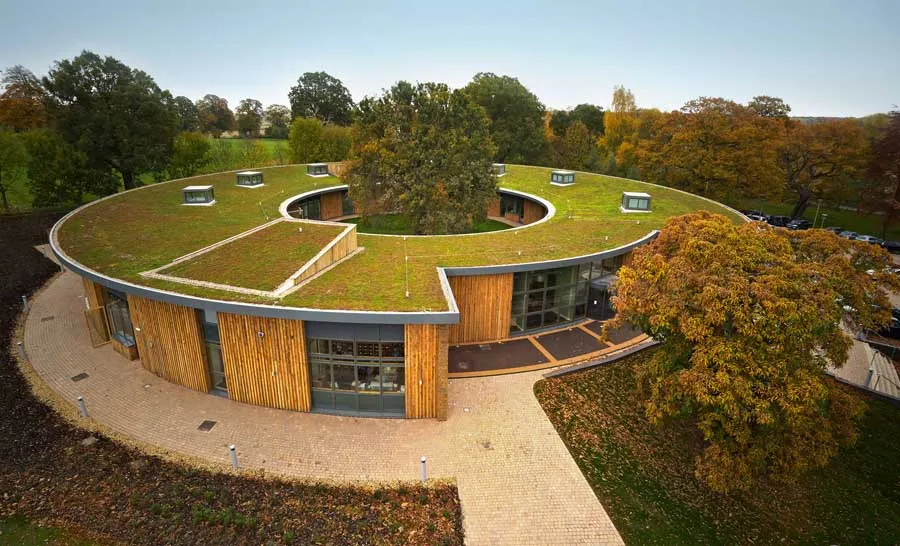
Green roof innovations are changing the way cities breathe, grow, and respond to climate challenges. What was once considered a niche environmental feature has evolved into a powerful architectural solution that blends ecology with design.
I still remember visiting a commercial building where the rooftop wasn’t a dull expanse of concrete but a vibrant garden filled with native grasses and pollinator plants. Employees were having lunch among wildflowers, while the city skyline stretched beyond. It felt like discovering a secret park above the streets.
That experience perfectly captures why rooftop greenery is gaining global momentum. It is not just about aesthetics. It is about resilience, sustainability, and smarter urban living.
Table of Contents
ToggleThe Evolution of Green roof innovations
Green roofs have existed for centuries in various forms, from Scandinavian sod houses to terraced landscapes in historic architecture. However, modern Green roof innovations combine advanced engineering with ecological science.
Today’s systems include waterproof membranes, drainage layers, lightweight soil substrates, and carefully selected vegetation. These components work together to protect the structure while supporting plant life.
In cities such as Copenhagen, regulations encourage or require green roofs in new developments. This policy-driven momentum has accelerated technological advancement and broader adoption.
The result is a new generation of rooftops that are both structurally reliable and environmentally transformative.
Climate Resilience and Stormwater Management
Urban flooding has become a pressing issue worldwide. Impermeable surfaces prevent rainwater from naturally soaking into the ground, overwhelming drainage systems.
Green roof innovations address this challenge by absorbing and slowing rainfall. Vegetation and soil layers capture stormwater, reducing runoff and easing pressure on city infrastructure.
In forward-thinking urban centers like Singapore, rooftop gardens play a vital role in water-sensitive urban design. They help mitigate flash floods while enhancing biodiversity.
By managing water naturally, green roofs restore part of the ecological balance that dense construction often disrupts.
Energy Efficiency Through Living Roofs
Temperature regulation is another major advantage of rooftop greenery. Concrete and asphalt absorb heat, contributing to the urban heat island effect.
By contrast, planted roofs insulate buildings and reflect sunlight. This lowers indoor temperatures during summer and reduces heating loss in winter.
In cities like Toronto, studies show that green roofs can significantly decrease energy consumption in commercial buildings.
These performance benefits make Green roof innovations a practical solution for reducing carbon footprints while cutting operational costs.
Biodiversity in the Sky
One of the most inspiring aspects of modern rooftop design is its contribution to urban biodiversity. Native plants attract birds, butterflies, and beneficial insects.
In densely built areas, rooftops become vital habitats for pollinators and small wildlife. Some projects even include beehives and urban farming spaces.
The California Academy of Sciences in San Francisco features a living roof that blends seamlessly with the surrounding parkland, supporting diverse species.
Through thoughtful planting strategies, Green roof innovations transform sterile surfaces into thriving ecosystems.
Structural Engineering Advancements
Modern rooftop gardens are possible because of advances in structural engineering. Lightweight soil systems reduce load stress on buildings.
Modular tray systems allow easy installation and maintenance. Drainage technology prevents water accumulation and protects roofing membranes.
Architects collaborate closely with structural engineers to ensure safety and longevity. Proper planning ensures that aesthetic and environmental benefits do not compromise building integrity.
These technical improvements have made Green roof innovations accessible to a wider range of residential and commercial projects.
Integration with Solar Technology
A growing trend involves combining vegetation with solar panels. Known as biosolar roofs, this hybrid approach maximizes rooftop potential.
Plants cool the surrounding air, improving photovoltaic efficiency. Meanwhile, solar panels provide partial shade that helps retain soil moisture.
In eco-focused cities such as Berlin, biosolar installations are becoming increasingly common in public buildings.
This synergy highlights how Green roof innovations can work alongside renewable energy systems rather than competing for space.
Urban Agriculture and Community Spaces
Rooftop farming is gaining traction as food security and sustainability become pressing concerns. Restaurants and residential complexes are cultivating herbs and vegetables above street level.
Community gardens on rooftops foster social interaction and environmental awareness. They reconnect urban residents with food production.
In places like New York City, rooftop farms supply local markets while reducing transportation emissions.
By blending agriculture and architecture, Green roof innovations strengthen community resilience and promote healthier lifestyles.
Wellness and Mental Health Benefits
Access to green spaces improves mental well-being. Rooftop gardens offer tranquil retreats in otherwise busy urban environments.
Employees working in offices with accessible green roofs report lower stress levels and increased productivity. Residents appreciate the opportunity to relax among plants without leaving their building.
Healthcare facilities are also integrating rooftop landscapes to enhance patient recovery environments.
These human-centered benefits demonstrate that Green roof innovations serve emotional and psychological needs alongside environmental goals.
Policy, Certification, and Accountability
Municipal incentives and green building certifications have accelerated adoption worldwide. Programs such as Leadership in Energy and Environmental Design reward projects that incorporate sustainable features like rooftop vegetation.
Some cities mandate green roofs for certain building types. These regulations encourage innovation and standardization.
Clear guidelines ensure quality installation and long-term maintenance. Transparency in performance data builds public trust.
By aligning policy and practice, Green roof innovations move from optional enhancement to essential infrastructure.
Economic Value and Long-Term Savings
While installation costs may initially exceed traditional roofing, long-term savings often outweigh the investment.
Extended roof lifespan, reduced energy bills, and potential tax incentives improve financial feasibility. Green roofs can also increase property value and attract environmentally conscious tenants.
Developers increasingly view sustainable design as a competitive advantage rather than a cost burden.
The economic case reinforces the practicality of Green roof innovations in modern real estate markets.
Research and Technological Development
Ongoing research continues refining soil composition, plant selection, and irrigation systems. Universities and environmental organizations conduct studies on performance metrics.
Data-driven insights improve water retention efficiency, biodiversity outcomes, and structural safety.
Cities like Melbourne invest in urban greening research to address climate adaptation challenges.
This commitment to evidence-based practice ensures that Green roof innovations evolve responsibly and effectively.
Cultural and Architectural Expression
Beyond functionality, rooftop landscapes add visual richness to skylines. Viewed from neighboring towers, they introduce texture and color to otherwise uniform cityscapes.
Architects use varied planting designs to reflect local ecosystems and cultural identity. Mediterranean herbs, native prairie grasses, or tropical foliage create distinct character.
The aesthetic versatility of Green roof innovations allows them to complement diverse architectural styles, from modern minimalism to adaptive reuse projects.
By merging ecological awareness with creative design, rooftops become expressive architectural elements rather than hidden surfaces.
Cities are expanding vertically, and rooftops represent untapped potential. Through engineering precision, environmental science, and thoughtful design, living roofs are redefining urban possibilities.
As climate pressures intensify and sustainability goals become more urgent, rooftops will continue evolving into active contributors to healthier, more resilient communities.
Read also: