
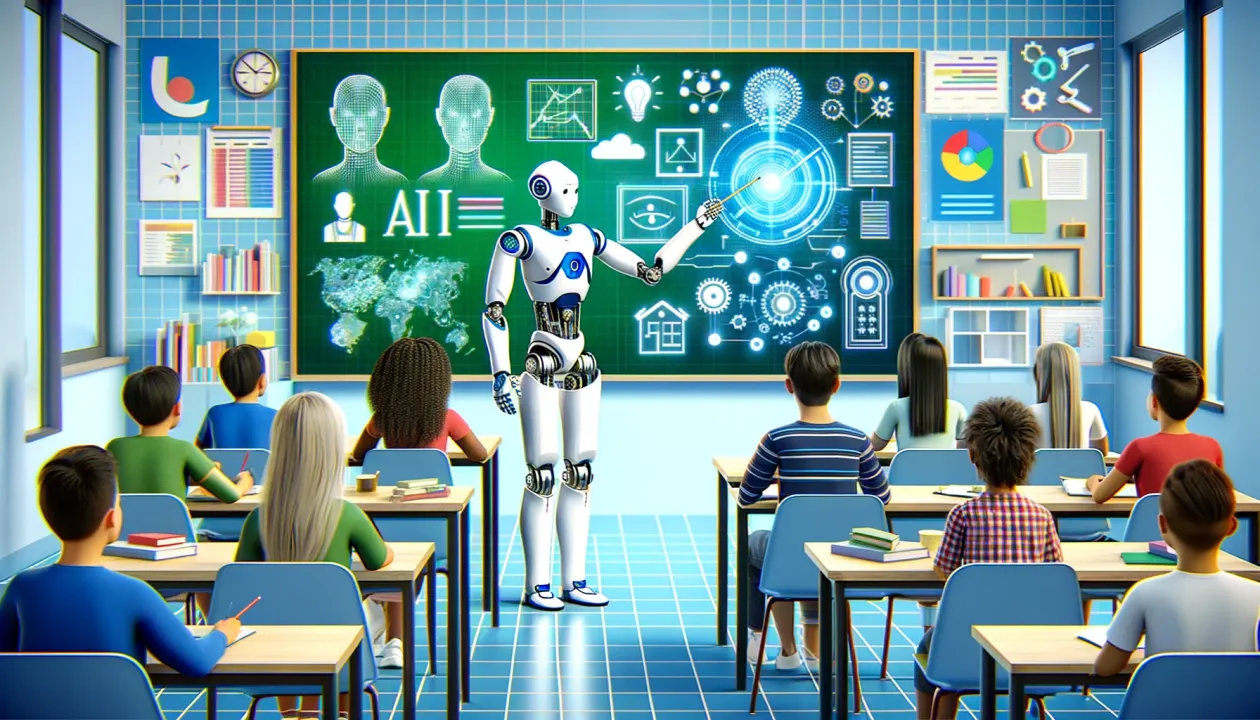
AI tutors in classrooms are rapidly changing the way students experience education. What once sounded like a futuristic concept is now quietly becoming part of daily lessons in schools around the world.
Teachers have always balanced multiple learning styles, skill levels, and attention spans within one room. No matter how dedicated they are, it’s difficult to personalize instruction for every single student at the same time.
That’s where intelligent digital support steps in. AI-powered systems are helping bridge learning gaps, reinforce concepts, and provide tailored guidance without replacing the human educator at the front of the class.
Table of Contents
ToggleWhy AI Tutors in Classrooms Are Gaining Momentum
Education systems are under pressure to improve outcomes while managing limited resources.
Larger class sizes and diverse student needs make personalization challenging. AI tutors in classrooms offer scalable solutions that adapt to each learner’s pace.
When a student struggles with algebra, the system can instantly adjust the difficulty level. When another excels, it can introduce advanced problems.
This dynamic responsiveness is one of the primary reasons schools are exploring AI integration.
Technology is not replacing teachers. It’s enhancing their capacity to reach every learner.
The Technology Behind AI Tutors in Classrooms
Artificial intelligence in education relies on machine learning algorithms and data analysis.
These systems assess student responses, identify patterns, and predict areas where additional practice is needed.
Companies like Khan Academy have introduced AI-driven features to support individualized practice.
Similarly, research initiatives at MIT are exploring adaptive learning technologies.
AI tutors in classrooms combine educational theory with computational intelligence to create responsive learning environments.
The result is a more interactive and adaptive academic experience.
Personalized Learning at Scale
Personalization has long been considered the gold standard in education.
However, traditional tutoring models are costly and difficult to scale.
AI tutors in classrooms make personalization accessible to entire student populations.
Each student interacts with a system that remembers their progress, adjusts exercises, and provides immediate feedback.
This constant feedback loop accelerates understanding and reduces frustration.
Students who might hesitate to ask questions in front of peers can engage confidently with AI-driven platforms.
A Real Classroom Story
In a middle school science class in Delhi, a teacher introduced an AI-based tutoring platform to assist with physics lessons.
Some students quickly grasped Newton’s laws, while others struggled with the mathematical components.
Instead of slowing down the entire class, the teacher used AI tutors in classrooms to provide targeted reinforcement exercises.
Within weeks, struggling students showed measurable improvement in comprehension.
The teacher noticed something else, too. Students became more engaged because they received instant feedback.
The AI didn’t replace her lessons. It strengthened them.
Supporting Teachers, Not Replacing Them
One of the biggest misconceptions about AI tutors in classrooms is that they will replace educators.
In reality, these tools function as assistants.
Teachers remain central to instruction, mentorship, and emotional guidance.
AI systems handle repetitive tasks such as grading quizzes or generating practice exercises.
This frees educators to focus on creativity, discussion, and individualized attention.
When implemented thoughtfully, AI enhances teacher effectiveness rather than diminishing it.
Addressing Learning Gaps
Learning gaps often widen when students fall behind and lack timely intervention.
AI tutors in classrooms help identify struggling learners early.
By analyzing response patterns, the system can detect misunderstanding before exam results reveal poor performance.
Early intervention improves long-term academic success.
For students with diverse learning needs, adaptive systems provide customized pacing and repetition.
This responsiveness reduces academic anxiety.
Data Privacy and Trust
Integrating technology into classrooms requires careful attention to data security.
Parents and administrators must trust that student information is handled responsibly.
Reputable institutions and technology providers implement strong encryption and compliance standards.
Organizations like UNESCO emphasize ethical AI usage in education.
AI tutors in classrooms must prioritize transparency and responsible data management.
Trust builds acceptance and long-term sustainability.
Equity and Accessibility
Education equity is a global challenge.
Students in under-resourced regions often lack access to qualified tutors.
AI tutors in classrooms can help bridge that gap by delivering consistent academic support.
Cloud-based systems allow schools with limited infrastructure to access advanced learning tools.
However, equitable implementation requires reliable internet access and affordable devices.
Bridging the digital divide remains essential for inclusive AI adoption.
AI Tutors in Classrooms and Student Engagement
Engagement is critical for effective learning.
Interactive exercises, gamified quizzes, and instant feedback keep students motivated.
AI tutors in classrooms can adapt content formats based on individual preferences.
Some learners respond better to visual explanations. Others prefer text-based guidance.
Personalized delivery increases focus and retention.
Engaged students are more likely to develop curiosity and independent thinking skills.
EEAT Perspective: Experience and Expertise in Educational AI
Experience and expertise are vital in the development of educational technology.
Systems designed with input from educators, psychologists, and data scientists ensure balanced implementation.
Authoritative research institutions validate learning outcomes through empirical studies.
Trustworthiness grows when schools share transparent results and measurable improvements.
AI tutors in classrooms must be grounded in proven educational methodologies, not just technological novelty.
Evidence-based implementation strengthens credibility.
Challenges in Implementing AI Tutors in Classrooms
Despite their benefits, challenges remain.
Teachers require proper training to integrate AI tools effectively.
Overreliance on automation could reduce critical thinking if not balanced thoughtfully.
Budget constraints limit adoption in some regions.
Technical glitches and system limitations can disrupt lessons.
AI tutors in classrooms should complement, not dominate, instructional design.
Thoughtful planning ensures positive outcomes.
Collaboration Between Humans and Machines
The future of education lies in collaboration.
Human teachers provide empathy, mentorship, and social guidance.
AI systems provide instant analysis, scalability, and precision.
Together, they create a hybrid learning model that maximizes strengths.
AI tutors in classrooms represent this partnership.
When both elements work harmoniously, students receive comprehensive support.
Global Adoption Trends
Countries worldwide are experimenting with AI integration.
Pilot programs in Asia, Europe, and North America explore adaptive learning systems in public schools.
Government initiatives encourage innovation while emphasizing ethical standards.
AI tutors in classrooms are gradually becoming part of broader digital education strategies.
The pace of adoption varies, but momentum is undeniable.
Education systems recognize the potential for transformation.
Preparing Students for an AI-Driven Future
Students today will enter workplaces shaped by automation and artificial intelligence.
Exposure to AI tutors in classrooms familiarizes them with intelligent systems early.
Understanding how AI functions fosters digital literacy.
Students learn to interact responsibly with emerging technologies.
Education must evolve alongside industry.
Integrating AI thoughtfully prepares learners for future opportunities.
Balancing Innovation with Human Values
While technology offers powerful tools, human connection remains irreplaceable.
Classroom discussions, group projects, and mentorship shape social development.
AI tutors in classrooms should enhance, not overshadow, interpersonal learning experiences.
Balanced integration preserves emotional intelligence while leveraging technological precision.
The ultimate goal is holistic growth.
Academic achievement and personal development must progress together.
Read also :-