
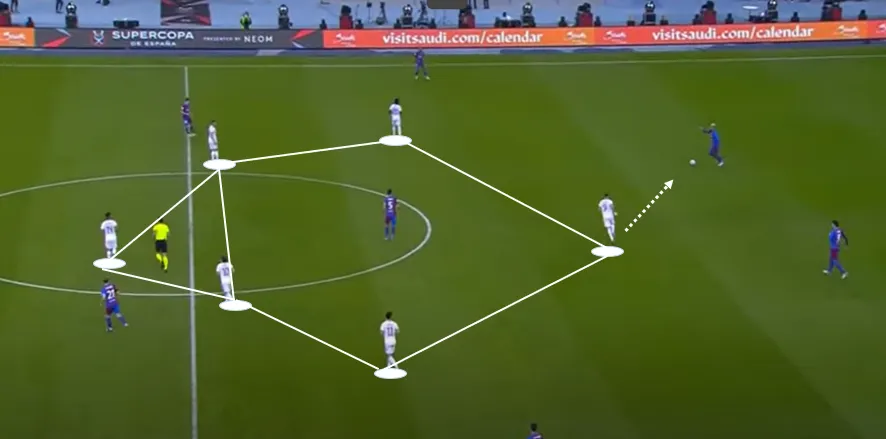
Football tactical analysis has completely changed the way we understand the beautiful game. What once looked like simple passing and shooting now reveals layers of structure, movement, and strategic thinking that decide matches long before the final whistle.
I remember watching a tense Champions League night where one subtle midfield adjustment flipped the game. The crowd focused on the goals, but the real story was happening in the spaces between players. That is the magic of tactical insight. When you start seeing football through a tactical lens, every movement begins to make sense.
In today’s data-driven era, football tactical analysis is not just for professional coaches. Fans, journalists, and aspiring players are diving deep into formations, pressing triggers, and positional play. Understanding these elements transforms the way we experience football.
Table of Contents
ToggleWhy Football Tactical Analysis Matters More Than Ever
Modern football is faster and more structured than ever. Elite clubs competing in tournaments like the UEFA Champions League rely on advanced planning and meticulous preparation.
Managers such as Pep Guardiola and Jurgen Klopp have elevated tactical preparation into an art form. Their teams do not just react; they execute carefully designed systems.
The rise of analytics departments within clubs has amplified football tactical analysis. Data scientists now collaborate with coaching staff to study passing networks, expected goals, and pressing intensity.
This evolution has made tactical awareness a competitive advantage rather than a luxury.
Foundations of Football Tactical Analysis
Every tactical discussion begins with formations. Traditional systems like 4-4-2 once dominated the sport. Today, fluid structures such as 4-3-3 and 3-2-5 evolve dynamically during matches.
When Manchester City build from the back, they often reshape into creative attacking patterns that stretch defensive lines. Observing this transformation is central to effective football tactical analysis.
Positioning determines control. Midfield triangles, overlapping fullbacks, and inverted wingers are not random decisions. They are strategic tools designed to exploit weaknesses.
Understanding space is key. Football is less about where the ball is and more about where the space appears.
Pressing Systems and Defensive Structures
High pressing has become a defining characteristic of modern football. Klopp’s teams at Liverpool FC showcased “gegenpressing,” where players immediately pressure opponents after losing possession.
Through football tactical analysis, we see how pressing is coordinated rather than chaotic. Triggers such as a backward pass or poor first touch initiate collective movement.
Defensive blocks also vary. Some teams defend deep, absorbing pressure before counterattacking. Others push their defensive line higher to compress space.
Studying these defensive transitions reveals how matches swing rapidly between control and vulnerability.
The Evolution of Midfield Roles
Midfielders are often the heartbeat of tactical systems. In-depth football tactical analysis highlights how roles have diversified over time.
The traditional defensive midfielder has evolved into a deep-lying playmaker. Consider how Luka Modric orchestrates tempo for Real Madrid. His positioning creates passing lanes others might overlook.
Box-to-box midfielders now combine stamina with intelligence. Tactical flexibility allows them to shift between defensive support and attacking runs seamlessly.
These micro-adjustments often go unnoticed by casual viewers but are central to modern strategy.
Tactical Flexibility in Big Matches
Elite managers rarely stick to one rigid system. Tactical adaptability defines success in high-stakes matches.
During encounters in the English Premier League, managers frequently alter formations mid-game. A back four may convert into a back three depending on possession phases.
Football tactical analysis helps explain why these shifts occur. Sometimes it’s about neutralizing a specific opponent. Other times it’s about exploiting numerical superiority in midfield.
In matches like El Clasico, subtle tactical decisions often determine outcomes more than individual brilliance.
Data Analytics and Modern Football Tactical Analysis
Technology has revolutionized football tactical analysis. Performance tracking systems measure sprint distance, positional heat maps, and ball progression patterns.
Clubs now evaluate expected goals metrics to assess scoring efficiency. Analysts study passing sequences to understand how teams break defensive lines.
Video analysis platforms allow coaches to review every movement frame by frame. Players receive personalized clips highlighting positional improvements.
This blend of data and visual study creates evidence-based decision-making at every level of the game.
Set Pieces as Tactical Weapons
Set pieces are no longer secondary aspects of football. They are strategic opportunities.
Teams competing in tournaments like the FIFA World Cup often dedicate significant training time to corners and free kicks.
Football tactical analysis reveals intricate blocking schemes, decoy runs, and rehearsed routines designed to disrupt defensive organization.
Some clubs even hire specialized set-piece coaches. Marginal gains from these moments frequently decide tight matches.
Player Intelligence and Spatial Awareness
Tactics are only as effective as the players executing them. Football IQ separates good players from great ones.
When Kevin De Bruyne identifies space between defensive lines, it’s not accidental. It’s a product of reading patterns and anticipating movement.
Football tactical analysis emphasizes decision-making speed. The best players process information in seconds, adjusting positioning instinctively.
Training sessions now simulate match scenarios to enhance cognitive sharpness alongside physical fitness.
Counterattacking and Transition Play
Transitions represent some of the most exciting moments in football. Quick turnovers can dismantle organized defenses.
Teams like Atletico Madrid under tactical discipline mastered compact defending before launching rapid counterattacks.
Studying transitions through football tactical analysis shows how spacing and timing determine success.
Even two or three precise passes during transition can create clear goal-scoring opportunities.
Youth Development and Tactical Education
Academies worldwide integrate tactical education into training programs. Young players learn positional discipline early.
Clubs inspired by philosophies of managers like Guardiola teach positional play concepts at grassroots levels.
Football tactical analysis tools are increasingly accessible to youth coaches. This democratization of knowledge raises overall game intelligence.
Aspiring players now watch professional matches differently, observing off-ball movement rather than just goals.
Psychological Dimensions of Tactics
Mental resilience plays a significant role in executing tactical plans. Pressure situations test concentration.
During knockout matches in the UEFA European Championship, teams must remain tactically disciplined despite emotional intensity.
Football tactical analysis also considers psychological momentum. A tactical tweak after halftime can boost morale dramatically.
Understanding human behavior alongside formation diagrams creates a more holistic approach.
Global Influence of Tactical Philosophies
Different regions have distinct tactical identities. Spanish football emphasizes possession. English football values intensity. Italian systems historically focus on defensive structure.
Global tournaments encourage cross-pollination of ideas. Coaches learn from each other, blending philosophies.
Football tactical analysis reveals how hybrid systems emerge from these influences.
The modern game is increasingly interconnected, reflecting tactical innovation worldwide.
Media and Fan Engagement Through Tactical Insight
Digital platforms now offer tactical breakdowns within minutes of match completion.
Analysts share heat maps and positional diagrams across social media. Fans engage in thoughtful discussions about strategy.
Television broadcasters enhance coverage with on-screen graphics and expert commentary.
This growing interest in football tactical analysis enriches fan experience and deepens appreciation for the sport’s complexity.
The Future of Football Tactical Analysis
Artificial intelligence continues to shape tactical evaluation. Predictive models simulate opponent behavior.
Virtual reality training may soon allow players to rehearse scenarios in immersive environments.
Clubs investing in research and analytics departments gain competitive edges.
As football evolves, tactical insight will remain central to sustained success.
Football tactical analysis bridges the gap between raw talent and structured excellence. It uncovers patterns hidden beneath the surface and explains how collective organization overpowers individual moments.
From grassroots academies to global tournaments, understanding tactical dynamics transforms how we view the game. Managers refine strategies, players sharpen awareness, and fans deepen their connection to every pass and movement.
The beauty of football lies not only in goals scored but in the intricate strategies that make those goals possible.
Read also:
chile national football team vs argentina national football team lineups
portugal national football team vs spain national football team timeline
brazil national football team vs chile national football team timeline
japan national football team vs indonesia national football team standings