
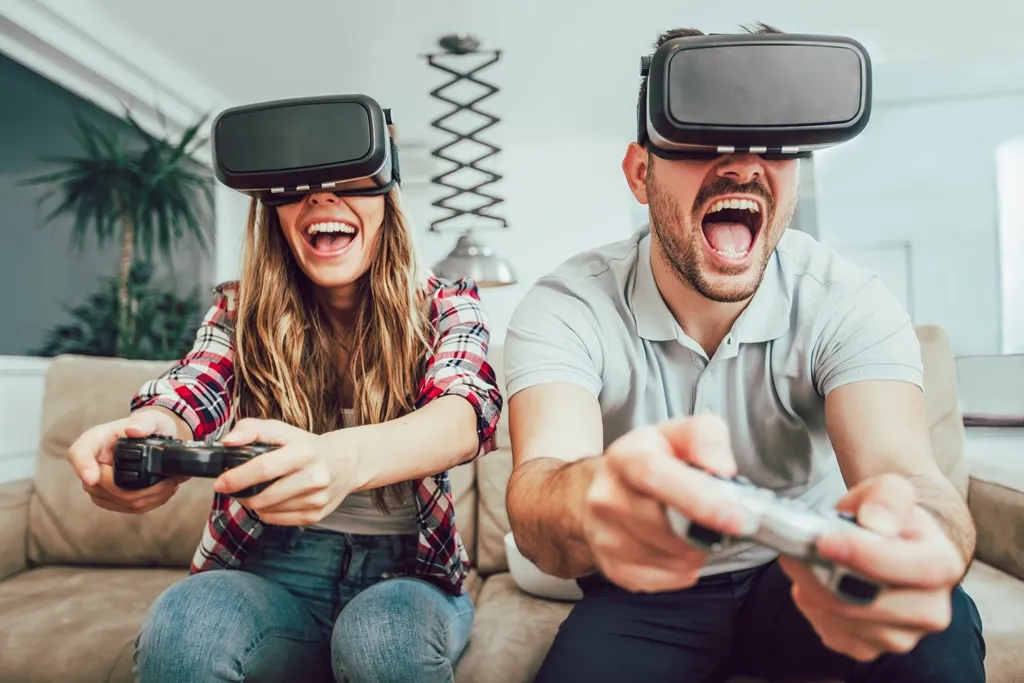
Augmented reality games are redefining how we experience entertainment by blending the digital world with our physical surroundings. Instead of staring only at a screen, players interact with virtual characters and objects layered onto real streets, parks, living rooms, and city landmarks.
A few years ago, gaming mostly meant sitting indoors with a console or mobile device. Today, players walk through neighborhoods hunting digital creatures, solving location-based puzzles, or competing in outdoor challenges. The boundaries between physical and digital spaces are fading.
This transformation is powered by rapid advancements in smartphone technology, GPS tracking, camera systems, and AR software development kits. The result is a new generation of immersive play that feels personal, social, and surprisingly active.
Table of Contents
ToggleThe Rise of Augmented Reality Games
The breakthrough moment for Augmented reality games came when smartphones became powerful enough to process real-time camera feeds and overlay 3D graphics seamlessly. Suddenly, millions of users could access immersive AR experiences without specialized equipment.
Early AR experiments were simple overlays. Now, advanced AR engines detect surfaces, measure depth, and track movement accurately. Virtual characters can sit realistically on a table or hide behind a real tree.
The popularity of location-based games demonstrated that players were eager for interactive experiences beyond traditional screens. Parks filled with players exploring digital quests proved that AR gaming had mass appeal.
Developers quickly realized that combining real-world exploration with interactive storytelling created powerful engagement.
How Augmented Reality Games Work
Behind the scenes, Augmented reality games rely on several core technologies working together.
The smartphone camera captures live video. Computer vision algorithms analyze the environment to detect surfaces, objects, and motion. GPS and accelerometers track the player’s location and orientation.
The AR engine then overlays 3D models, animations, and interactive elements into the real-time view. Advanced rendering ensures that lighting and shadows match the environment, making digital objects feel believable.
This seamless integration creates the illusion that virtual elements truly exist in the physical world
Real-World Story: From Casual Player to Community Leader
Consider a working professional who downloads an AR adventure game to stay active after long office hours. What begins as an evening walk soon becomes a social routine.
She meets other players at local landmarks, forms teams, and participates in weekend tournaments. Over time, she helps organize community events and coordinates in-game strategy sessions.
This is the social power of Augmented reality games. They encourage physical activity, outdoor exploration, and real-world connections.
Unlike traditional gaming, AR experiences often promote movement and face-to-face interaction, adding a unique health and social dimension.
Social Interaction and Community Building
One of the strongest aspects of Augmented reality games is their ability to bring people together.
Players collaborate to complete missions or compete in team-based challenges. Real-world locations become hubs of digital interaction.
Community-driven events often take place in parks, malls, or cultural landmarks. These gatherings blend digital objectives with physical presence.
Game developers frequently introduce seasonal updates tied to real-world holidays or events, strengthening the connection between virtual play and everyday life.
This hybrid social model enhances engagement and fosters loyalty among players.
Educational and Cultural Impact
Beyond entertainment, Augmented reality games have educational potential.
Historical AR games can guide players through city streets while revealing stories about monuments and heritage sites. Science-based AR apps allow students to visualize complex concepts directly in their surroundings.
Museums increasingly integrate AR experiences to enhance visitor engagement. Instead of reading static plaques, visitors interact with animated historical figures or reconstructed artifacts.
Educational researchers highlight AR as a powerful tool for experiential learning. It transforms passive observation into interactive exploration.
This intersection of gaming and education demonstrates how immersive technology can enrich real-world understanding.
Business Opportunities and Economic Influence
The growth of Augmented reality games has opened new revenue streams for developers and brands.
Location-based sponsorships allow businesses to attract players to physical stores. In-app purchases generate ongoing income for developers.
Brands collaborate with AR platforms to launch promotional campaigns tied to digital challenges or events.
The economic ecosystem extends beyond gaming companies. Tourism boards, retail chains, and event organizers benefit from increased foot traffic driven by AR experiences.
Industry analysts note that AR gaming contributes significantly to the broader immersive technology market.
Technology Advancements Driving Growth
The rapid improvement of smartphone cameras and processing power plays a central role in AR innovation.
Cloud computing supports large-scale multiplayer experiences. 5G connectivity reduces latency, enabling smoother real-time interaction.
Wearable AR glasses are also under development. These devices aim to make Augmented reality games even more immersive by freeing users from constantly holding smartphones.
Artificial intelligence enhances object recognition and environmental mapping, improving realism and stability.
As hardware evolves, the potential for more complex and dynamic AR experiences expands.
Health and Physical Activity Benefits
Unlike sedentary gaming models, Augmented reality games often encourage movement.
Players walk long distances, explore new neighborhoods, and engage in outdoor activity to complete in-game objectives.
Health experts acknowledge that location-based AR gaming can promote moderate physical activity. Some players report improved fitness levels after regularly participating in AR challenges.
However, safety awareness remains essential. Responsible design includes reminders about surroundings and safe movement practices.
Balancing entertainment with well-being ensures sustainable engagement.
EEAT Perspective: Experience, Expertise, Authority, Trust
Developing and managing Augmented reality games requires multidisciplinary expertise.
Software engineers, UX designers, data security experts, and behavioral researchers collaborate to create immersive yet safe experiences.
Authoritative institutions publish research on AR’s cognitive and social effects. These studies guide ethical design and best practices.
Trustworthiness is critical when location data and personal information are involved. Reputable platforms implement transparent privacy policies and secure data handling procedures.
User trust strengthens when companies prioritize safety, transparency, and continuous improvement.
Challenges Facing Augmented Reality Games
Despite their popularity, AR games face limitations.
Battery consumption remains a challenge due to continuous camera and GPS use. Environmental factors like poor lighting can affect tracking accuracy.
Privacy concerns arise when location data is required. Developers must comply with global data protection regulations.
There is also the issue of accessibility. Not all users have high-performance devices capable of supporting advanced AR features.
To maintain growth, Augmented reality games must address these technical and ethical challenges responsibly.
Future Trends in AR Gaming
The next generation of AR experiences will likely integrate artificial intelligence more deeply.
Real-time language translation could enable global collaboration. Advanced object recognition might allow digital characters to interact with specific real-world items dynamically.
Integration with smart city infrastructure could create large-scale interactive events spanning entire urban areas.
Developers envision persistent AR worlds where digital elements remain anchored to physical locations indefinitely.
As immersive technologies evolve, Augmented reality games may merge seamlessly with daily life activities.
Creativity and Storytelling in AR Worlds
Storytelling within AR environments requires unique creativity.
Writers design narratives that unfold across real-world locations. Artists craft 3D models that blend convincingly with diverse environments.
Sound designers create spatial audio that enhances immersion.
The creative process behind Augmented reality games involves understanding both digital storytelling and physical space dynamics.
Players become part of the narrative, influencing outcomes through real-world actions.
Cultural and Global Reach
AR gaming has global appeal. Players from different countries share experiences through digital quests tied to local landmarks.
Cultural festivals can be integrated into gameplay, promoting tourism and cross-cultural understanding.
Developers must consider cultural sensitivity when designing globally accessible content.
The expansion of Augmented reality games demonstrates how immersive technology can connect diverse communities.
Digital interaction layered onto physical environments creates a powerful shared experience.
As technology continues advancing, augmented reality is moving beyond novelty into mainstream adoption. The blending of physical and digital realms offers new possibilities for entertainment, education, and community engagement.
The growth of AR gaming reflects broader trends in immersive innovation, supported by technical expertise, responsible governance, and user-centered design.
