
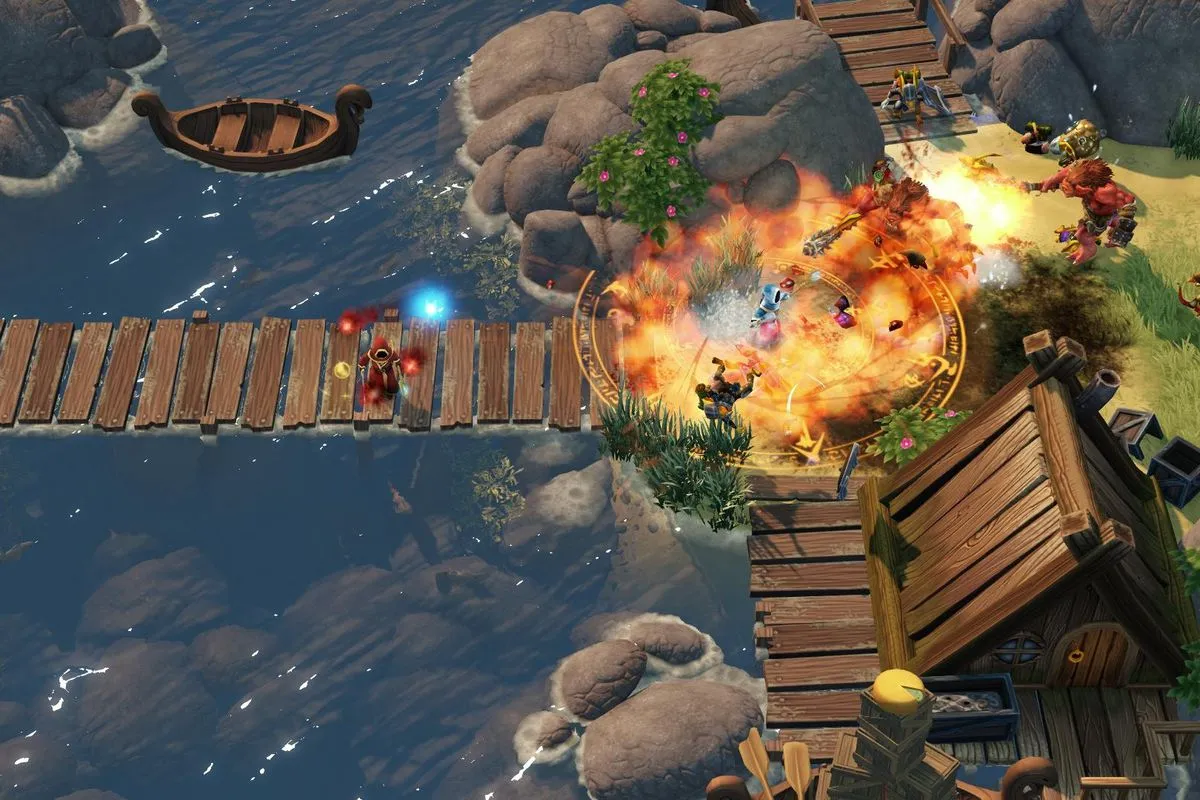
Couch-Coop Indies have quietly become one of the most meaningful movements in modern gaming, reminding players why sitting side by side once felt magical. In an era dominated by online matchmaking and voice chat, these games invite friends, couples, siblings, and families to share a single screen, a single space, and a single experience.
There is something deeply human about laughing at the same mistake, arguing over strategy, or celebrating a hard-earned victory together on the couch. Indie developers understand this emotional connection and build games that thrive on shared presence rather than distant servers.
While blockbuster titles chase realism and scale, indie studios focus on intimacy. Their games are designed to be played together, not just at the same time. That design philosophy has sparked a quiet renaissance of local multiplayer that feels both nostalgic and refreshingly modern.
Why Local Multiplayer Never Truly Disappeared
Local multiplayer never vanished because it satisfies a fundamental social need. Humans enjoy shared experiences, especially ones that create stories worth retelling. Even as online play became dominant, the desire to gather around a screen never faded.
What changed was accessibility. Indie developers lowered the barrier, creating games that are easy to pick up but hard to put down. Simple controls, clear objectives, and immediate feedback make these experiences welcoming to both seasoned gamers and newcomers.
Parents play with children. Friends play during gatherings. Couples discover new ways to cooperate or compete. These moments feel natural because the design encourages communication and shared problem solving.
Local play thrives not because of nostalgia, but because it delivers genuine connection.
The Indie Advantage in Designing Shared Experiences
Indie studios have a unique advantage. Without the pressure of massive budgets or shareholder expectations, they can design around emotion instead of metrics. This freedom allows experimentation with mechanics that prioritize interaction over spectacle.
Many indie teams consist of developers who grew up playing local multiplayer games themselves. Their personal experiences influence design choices, from screen layout to difficulty balance. They know what it feels like when a game supports cooperation rather than punishing mistakes.
This authenticity strengthens trust with players. When a game feels designed by people who understand shared play, it shows in every detail.
Couch-Coop Indies and the Power of Shared Struggle
One of the defining traits of Couch-Coop Indies is how they turn struggle into bonding. Failure becomes funny instead of frustrating when everyone shares responsibility. Success feels earned because it required communication and coordination.
Games that require players to synchronize actions naturally encourage conversation. Shouting instructions, reacting to surprises, and adapting strategies happen organically. These moments build memories far beyond the game session.
This design approach aligns with research in social psychology, showing that shared challenges strengthen relationships. Indie developers may not cite studies, but their instincts reflect real human behavior.
Accessibility as a Core Design Philosophy
Accessibility plays a crucial role in the success of local co-op indie games. Simple mechanics ensure that anyone can join, regardless of gaming background. Tutorials are often integrated seamlessly into gameplay, avoiding long explanations.
Visual clarity matters as well. Clear character differentiation, readable environments, and intuitive cues prevent confusion when multiple players share the same screen.
Accessibility is not about reducing depth. It is about removing unnecessary friction so players can focus on interaction rather than controls.
This thoughtful design builds trust and encourages repeated play sessions.
Emotional Storytelling Through Cooperative Play
Storytelling in local multiplayer games works differently than in single-player titles. The narrative emerges from interaction rather than cutscenes. Players remember moments they created together rather than scripted plot points.
Some indie games use shared objectives to tell emotional stories about cooperation, sacrifice, and trust. Others rely on humor, letting chaos and unpredictability drive the experience.
These stories feel personal because players are part of them. The emotions are real, not observed from a distance.
Couch-Coop Indies as Social Experiences, Not Just Games
Another reason Couch-Coop Indies resonate is that they function as social activities. They compete with board games, party games, and movie nights rather than other video games.
This positioning expands their audience. People who do not identify as gamers still enjoy playing together when the experience feels inclusive and fun.
The living room becomes a shared stage. Controllers pass hands. Conversations continue between rounds. The game facilitates connection rather than demanding isolation.
This social role strengthens the cultural relevance of local multiplayer indie games.
The Role of Art Style and Sound Design
Visual and audio choices significantly impact shared experiences. Indie developers often favor stylized art that remains readable even when multiple players crowd the screen.
Bright colors, distinct silhouettes, and expressive animations help players track action effortlessly. Sound effects provide instant feedback, reinforcing actions and outcomes.
Music sets tone without overwhelming conversation. These choices demonstrate an understanding that players are interacting with each other, not just the screen.
Thoughtful presentation supports immersion while preserving social interaction.
Real-Life Examples of Shared Moments
Picture a small group of friends gathered after a long week. Controllers in hand, snacks nearby, laughter filling the room. Mistakes turn into jokes. Victories spark cheers.
These moments are common because local co-op indie games are designed for them. They create space for interaction rather than isolating players behind separate screens.
Such experiences explain why these games often spread through word of mouth. People recommend them not for graphics or length, but for the memories they help create.
Trust and Credibility in Indie Development
From an EEAT perspective, trust matters. Indie studios earn credibility through transparency and community engagement. Many share development updates, listen to player feedback, and adjust designs accordingly.
Players feel involved in the process, strengthening loyalty. This openness builds expertise over time, as developers refine their understanding of what makes local multiplayer work.
Positive reviews, consistent updates, and responsive communication reinforce authority. Players trust developers who clearly care about their audience.
Couch-Coop Indies and the Return of the Living Room
The living room has regained importance as a gaming space. Instead of everyone retreating to separate devices, local co-op games invite people to gather again.
This shift reflects broader cultural trends toward shared experiences. People value presence in a digital world that often feels distant.
Indie games fit naturally into this movement, offering experiences that feel personal and immediate.
The couch becomes a place of collaboration rather than competition alone.
Balancing Cooperation and Competition
Many successful local co-op indie games blend cooperation and competition carefully. Players work together toward shared goals while still expressing individual skill.
This balance keeps sessions engaging. Too much competition creates tension. Too much cooperation can feel passive. Indie developers fine-tune mechanics to encourage playful rivalry without frustration.
The result is dynamic interaction that adapts to different group dynamics.
Long-Term Appeal and Replay Value
Replayability in local multiplayer games comes from social variation rather than content volume. Different groups create different experiences.
The same game feels new when played with different people. Strategies evolve. Inside jokes emerge. Roles shift.
This organic replay value extends a game’s lifespan far beyond its initial playthrough.
Couch-Coop Indies in a Digital-First Industry
In a market driven by online connectivity, Couch-Coop Indies stand out by focusing on physical presence. This contrast makes them memorable.
Digital storefronts have made these games more visible, allowing niche experiences to reach global audiences. Players seeking meaningful shared play can easily discover titles that fit their needs.
The industry benefits from this diversity. Local multiplayer indie games prove that innovation does not always require cutting-edge technology.
Educational and Family-Friendly Impact
Local co-op games also serve educational and family contexts. They teach communication, problem solving, and patience naturally.
Parents appreciate games that encourage teamwork rather than isolation. Educators recognize the value of collaborative play.
This broader impact strengthens the cultural relevance of indie local multiplayer experiences.
Creative Freedom and Experimental Mechanics
Indie developers often experiment with unconventional mechanics that would be risky in big-budget titles. Local multiplayer provides a safe space for creativity.
New control schemes, asymmetrical roles, and physics-based interactions thrive in shared environments. Players adapt together, learning through play.
This experimentation pushes the medium forward.
Why Couch-Coop Indies Matter Today
Couch-Coop Indies matter because they remind us what games can be at their core. They are not just products or services. They are shared experiences that bring people together.
In a world increasingly mediated by screens and distance, these games offer presence, laughter, and connection.
Their continued success proves that human interaction remains central to meaningful play.
Read also:
addicting game
addicting games
rockstar games launcher
addictinggames
rockstar launcher