
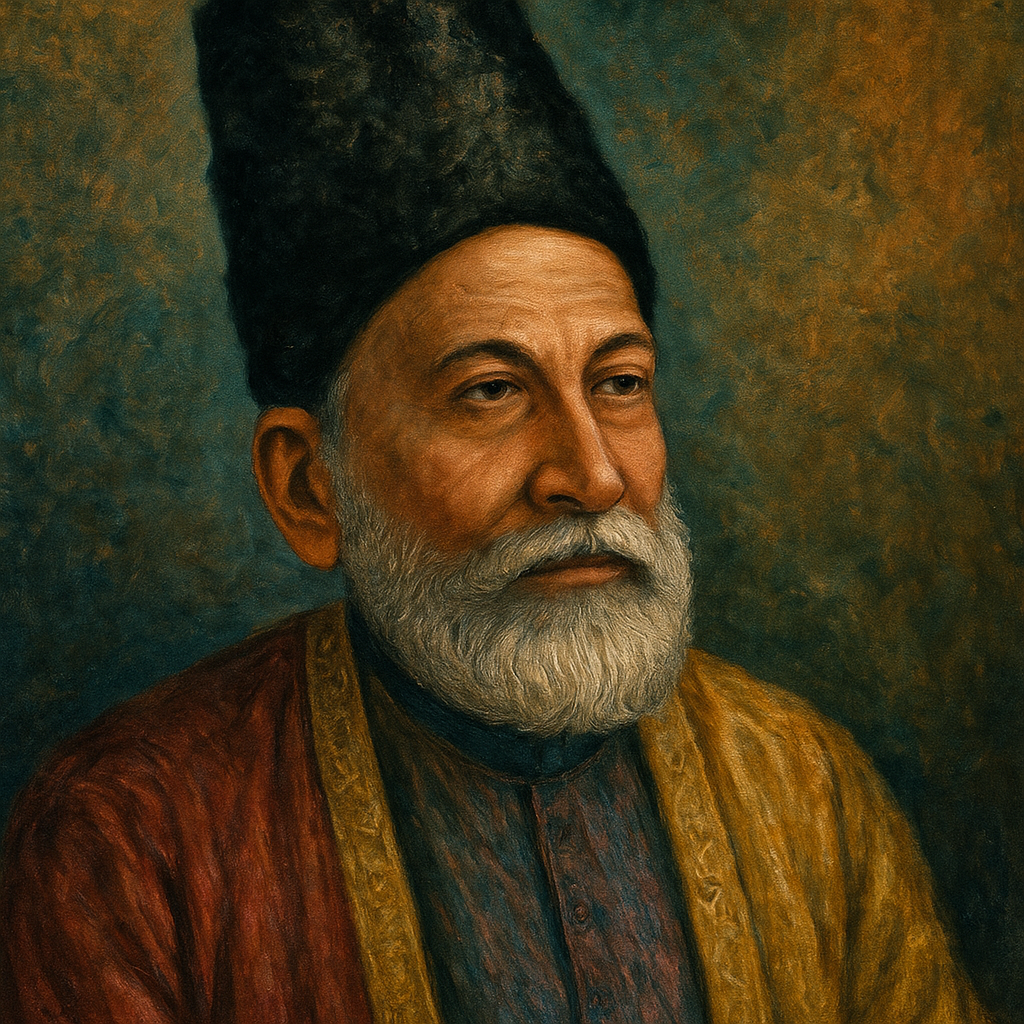
Mirza Ghalib, one of the most celebrated poets in Urdu literature, left an indelible mark on the world of poetry with his profound and evocative shayari. Born in 1797 in Agra, Ghalib’s verses continue to resonate with readers across generations, transcending cultural and linguistic boundaries. Mirza Ghalib Shayari, a blend of intricate emotions, philosophical musings, and linguistic brilliance, captures the essence of human experience with unparalleled depth. This article delves into the life, style, and enduring legacy of Ghalib’s poetry, focusing on the unique qualities that make his shayari timeless.
The Life of Mirza Ghalib
Mirza Asadullah Baig Khan, known by his pen name Ghalib, was born during a time of significant political and social upheaval in India. The decline of the Mughal Empire and the rise of British colonial rule shaped the backdrop of his life. Despite facing personal tragedies, financial struggles, and societal challenges, Ghalib’s poetic genius flourished. His ability to weave personal experiences into universal themes gave his work a distinctive voice. Writing primarily in Urdu and Persian, Ghalib’s shayari reflects the complexities of love, loss, existential dilemmas, and the transient nature of life.
Ghalib’s poetry was not widely appreciated during his lifetime. His unconventional style and philosophical depth often puzzled his contemporaries, who were accustomed to more straightforward poetic expressions. However, his work gained recognition posthumously, cementing his status as a literary icon. Today, his shayari is celebrated for its linguistic richness and emotional resonance, making it a cornerstone of Urdu literary tradition.
See Also: lookwhatmomfound contact
The Essence of Ghalib’s Shayari
Ghalib’s shayari is characterized by its intricate wordplay, layered meanings, and philosophical undertones. His verses often explore themes of love, heartbreak, mortality, and the human condition, presented with a rare blend of wit and melancholy. Unlike many poets of his era, Ghalib’s work is not limited to romantic expressions; it delves into existential questions, offering insights into the complexities of life.
One of Ghalib’s most famous couplets is:
“Hazaaron khwaishein aisi ke har khwaish pe dam nikle,
Bahut nikle mere armaan, lekin phir bhi kam nikle.”
This couplet reflects the unfulfilled desires that define human existence. The poet conveys the intensity of his aspirations and the bittersweet realization that even their partial fulfillment leaves a sense of longing. Such verses showcase Ghalib’s ability to capture universal emotions with precision and elegance.
Another hallmark of Ghalib’s shayari is his mastery of the ghazal form. The ghazal, a poetic structure consisting of rhyming couplets with a refrain, allows Ghalib to express complex emotions within a disciplined framework. His ghazals often shift seamlessly between themes—love, spirituality, and existential inquiry—within a single poem, inviting readers to ponder multiple layers of meaning.
Discover More: indoor pets lwmfpets
Themes in Ghalib’s Shayari
Love, in its myriad forms, is a central theme in Ghalib’s poetry. However, his portrayal of love transcends conventional romanticism. It encompasses unrequited love, divine love, and the pain of separation. In one of his couplets, he writes:
“Ishq ne ‘Ghalib’ nikamma kar diya,
Warna hum bhi aadmi the kaam ke.”
Here, Ghalib humorously attributes his perceived “uselessness” to the overwhelming power of love, blending self-deprecation with profound insight. This ability to infuse humor into serious themes is a hallmark of his style, making his shayari accessible yet deeply thought-provoking.
Ghalib’s poetry also reflects his philosophical musings on life and mortality. He often grapples with the impermanence of existence, as seen in this couplet:
“Maut ka ek din muayyan hai,
Neend kyun raat bhar nahi aati?”
This verse captures the inevitability of death while expressing the restlessness of human consciousness. Ghalib’s ability to articulate existential angst in simple yet profound words is what makes his shayari timeless.
Linguistic Brilliance and Style
Ghalib’s command over Urdu and Persian allowed him to craft verses with unparalleled linguistic finesse. His shayari is known for its economy of words, where every syllable carries weight. He often employed metaphors, paradoxes, and double entendres to create layers of meaning. This complexity, combined with the musicality of his verses, makes his poetry a delight to recite and ponder.
His use of Persian influences, combined with the colloquial richness of Urdu, created a unique poetic diction. Ghalib’s shayari often requires readers to pause and reflect, as the meanings unfold gradually. This intellectual engagement is one reason why his work appeals to both casual readers and literary scholars.
Read also: giveaway lookwhatmomfound
Ghalib’s Legacy in Modern Times
Ghalib’s shayari continues to inspire poets, musicians, and artists worldwide. His verses have been adapted into songs, recited in mushairas (poetic gatherings), and quoted in everyday conversations. In modern India and Pakistan, Ghalib’s poetry remains a cultural touchstone, with his ghazals performed by renowned artists in various genres, from classical music to Bollywood.
The universal appeal of Ghalib’s shayari lies in its ability to speak to the human heart across time and space. Whether it’s the pain of unrequited love or the search for meaning in a chaotic world, Ghalib’s words offer solace and insight. His poetry has been translated into numerous languages, allowing global audiences to appreciate his genius.
In contemporary times, Ghalib’s shayari has found a new audience through social media platforms, where his couplets are shared widely. The brevity and emotional depth of his verses make them perfect for capturing fleeting moments of reflection in the digital age. Literary festivals, academic discussions, and online forums continue to analyze and celebrate his contributions, ensuring that his legacy endures.
Know More: giveaways lookwhatmomfound
Conclusion
Mirza Ghalib’s shayari is more than just poetry; it is a window into the human soul. His ability to weave complex emotions, philosophical insights, and linguistic artistry into concise couplets sets him apart as a literary giant. From the pain of unfulfilled desires to the fleeting nature of life, Ghalib’s verses capture the essence of what it means to be human. His shayari remains a timeless treasure, offering wisdom, beauty, and solace to all who encounter it. As long as there are hearts that feel and minds that ponder, Ghalib’s poetry will continue to resonate, a testament to the enduring power of his words.